Conducting Research and Development (R&D) can be a difficult and costly process for Australian businesses. To encourage industry to conduct R&D, a main initiative of the Australian federal government is the Research & Development Tax Incentive.
Tim Naylor, Business Development Manager at 333D Limited
Tim Naylor @ 333D
With big companies such as Boeing and Adidas beginning to take 3D printing technology seriously and find ways to utilise it in their own businesses, we decided to take the opportunity to sit down with Tim Naylor, Business Development Manager of 333D in Port Melbourne and get a feel for how 3D printing technology maybe able to benefit your business.
Q: As someone who has undertaken a Masters in Additive Manufacturing, what excites you about 3D printing technology?
additive manufacturing
The exciting thing about additive manufacturing is that it captures the imagination and extends the boundary of what is possible. 3D printing is democratising production, enabling the design and manufacturing of custom products to be accessible to the masses.
Previously you had to worry about tooling, minimum order quantities, geometrical constraints on mass produced parts, now you just need a computer and access to a 3D printer and the average Joe can produce their own creations.
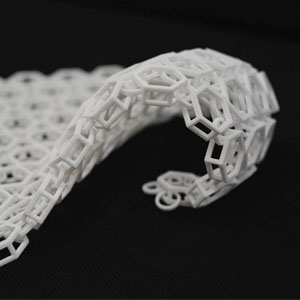
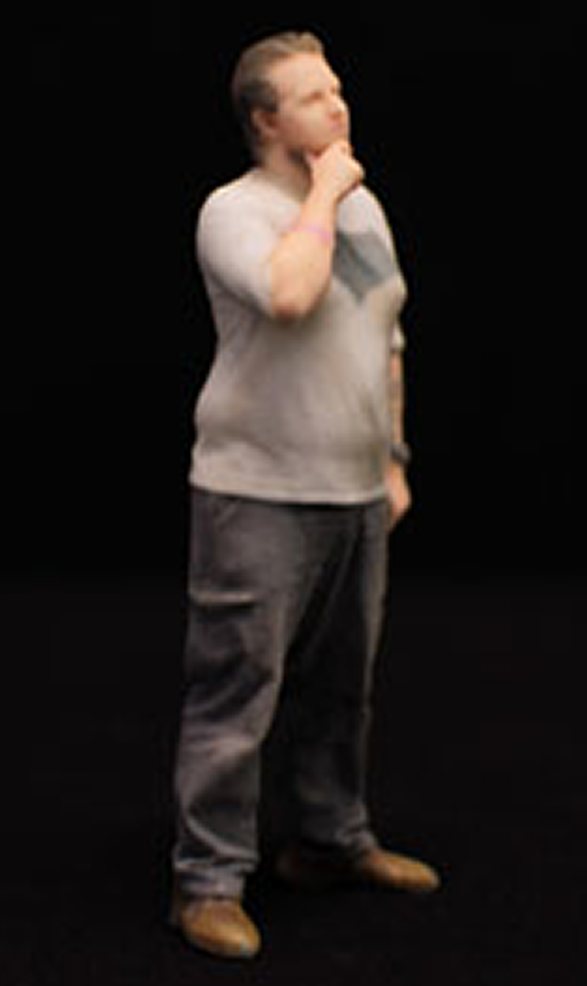
Colour printing of scanned objects
Q: What improvements are you looking for in printing technology? What will that allow the technology to achieve?
The key improvements we are looking for in 3D printing technology is the speed of printing, range of materials and cost of production.
3D printing has historically been a slow manufacturing process, with some prints for large objects taking a few days using FDM (Fused Deposition Modelling) technology, which could take 30 seconds using injection moulding.
Newer resin printers are dramatically decreasing 3D print time. Companies such as Carbon 3D are claiming that their technology will (in future) rival injection moulding, enabling mass customisation of manufactured parts.
Q: Are there any areas of business that you can see potential for 3D printing, where you believe that the technology is currently being underutilised?
The architecture and building industry are dramatically under-utilising the technology. For producing architectural models, the technology is now faster, cheaper and more accurate, than a person spending weeks with balsa wood and a laser cutter, manually assembling a scaled architecture model. 3D printing has the potential to seriously disrupt this market as you can print 100’s of highly accurate architectural models in the one print run, within a few days. There is also the capability to print some of these models in colour. This allows architects, property developers and even home owners, to physically view a scaled model of a design, at a fraction of the cost and lead time of a handmade model.
Q: Metal printing is a fairly new 3D printing method and comes in several forms. Can you tell us a little more about the different methods, and their strengths and weaknesses?
There are two predominant metal 3D printing method, Selective Laser Melting (SLM) and Electron Beam Melting (EBM). They essentially involve the use of directing a laser or stream of electrons onto a bed full of metallic powder. The laser or electron beam, traces out the cross-sectional profile of the object and the object is built up layer-by-layer, by fusing the metallic particles together.